

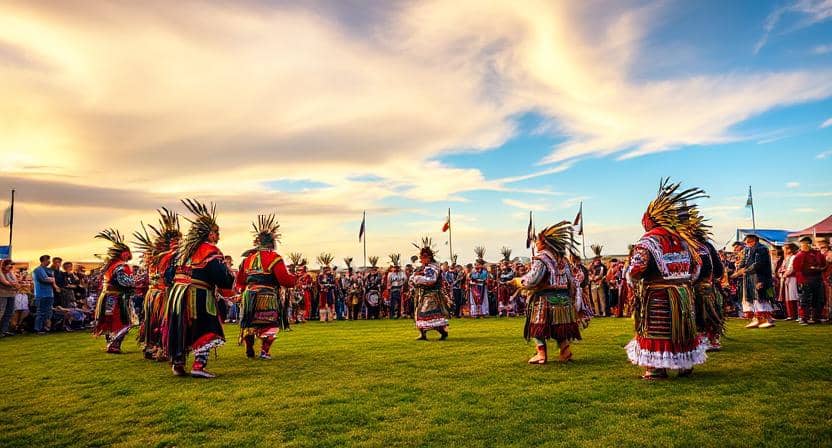
A powwow is a vibrant and deeply spiritual gathering rooted in Native American traditions. Celebrated by Indigenous peoples across North America, powwows serve as a platform for cultural expression, spiritual practices, and social bonding. These events are a blend of ancient customs and modern elements, bringing together people from various Native communities to celebrate their shared heritage, music, dance, and spirituality.
The Origin of Powwows
The word “powwow” comes from the Narragansett word powwaw, which means “spiritual leader” or “medicine man.” Historically, powwows were significant religious and social gatherings where Native Americans came together to share news, conduct ceremonies, perform dances, and strengthen communal bonds. Over time, powwows have evolved into public events that serve not only as cultural gatherings but also as celebrations of Native heritage.
The Significance of Powwows
Powwows hold deep spiritual significance in Native American culture. They are seen as a way to honor ancestors, maintain connections to spiritual teachings, and celebrate the bond with the earth. The ceremonies often involve prayers, singing, drumming, and traditional dances, which are viewed as forms of meditation, healing, and remembrance.
At powwows, participants come together to celebrate their cultural identity and reaffirm their commitment to preserving and passing down these sacred traditions. They are a vital means of maintaining the continuity of Native cultures, especially as many communities face challenges related to assimilation and cultural erasure.
What Happens at a Powwow?
Powwows are vibrant, high-energy events with various activities that bring Native cultures to life. Key components of a powwow include:
1. Grand Entry
The grand entry is a formal procession that kicks off the powwow. Dancers, drummers, and dignitaries enter the circle, and the community stands to honor the sacredness of the event. It is accompanied by songs that are a tribute to the Creator, honoring the people and the earth.
2. Dancing
Dance is one of the central elements of a powwow. There are various styles of dance, including traditional, grass, fancy, and jingle dress, each with its own symbolism and significance. Each dancer wears elaborate regalia that represents their personal journey, cultural identity, and spiritual connection to their people.
3. Drumming and Singing
The drum plays a vital role in powwows. Drumming is considered the heartbeat of the community, and songs are believed to connect the participants to the spirit world. The drum is often accompanied by chanting or singing, and these powerful sounds create a sense of unity and sacredness during the event.
4. Feasts and Giveaways
A powwow is often a time for feasting, with community members sharing food and offering gifts. These give-aways symbolize generosity and the spirit of giving back to the community.
5. Competition and Celebration
In modern powwows, dancing competitions and contests are common. These competitions, however, do not solely focus on winning, but also emphasize the beauty and grace of the performance. It’s a way to showcase talent while honoring the tradition.
The Sacredness of Powwows
For Native American communities, powwows are not just a form of entertainment but a sacred tradition. The ceremonies conducted during a powwow have a spiritual dimension, with participants seeking to maintain harmony with nature, the Creator, and the spirit world. The dances, the songs, and the prayers are ways to connect with these spiritual realms and express gratitude, seek guidance, and offer healing.
Powwows are also an opportunity for Native Americans to reinforce their cultural identity and heritage. By participating in these events, individuals reconnect with their ancestors, preserve traditional practices, and share their history with younger generations. Powwows help keep alive ancient customs that are crucial to the survival of Native cultures.
Conclusion
A powwow is much more than a cultural festival; it is a celebration of life, spirituality, and community. These sacred gatherings continue to serve as a vital part of Native American life, offering a space for connection, healing, and remembrance. By understanding the deep significance of powwows, we gain a greater appreciation for the richness of Native American culture and the traditions that have endured for centuries.

