

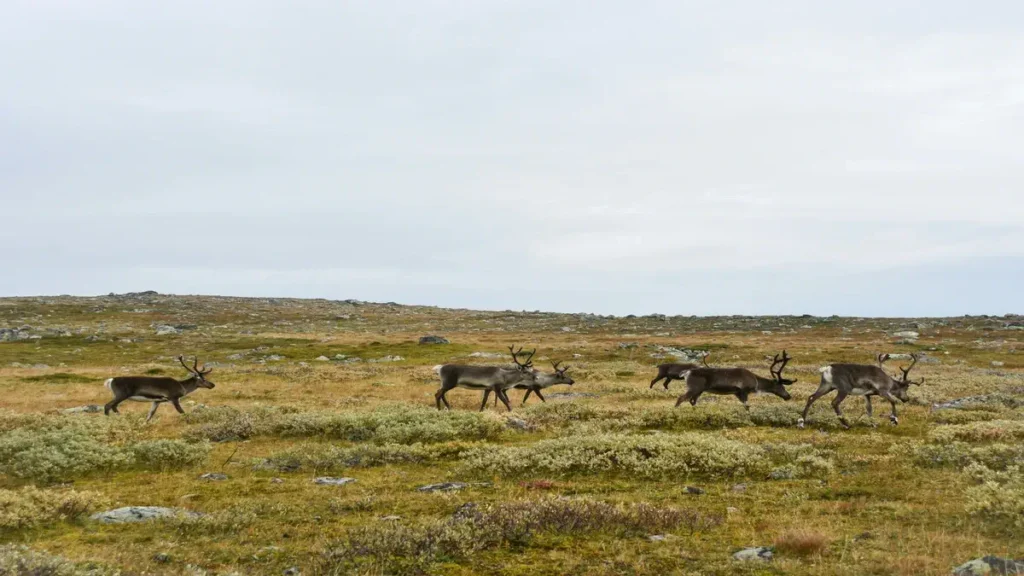
In the vast, frozen expanse of Canada’s Northwest Territories, where the Arctic winds whisper ancient stories and the midnight sun paints the sky in endless daylight, a unique tradition thrives. The Indigenous reindeer herders of Inuvik, primarily from the Inuvialuit community, carry on a way of life that blends cultural heritage, survival skills, and a deep connection to the land. This is the story of Canada’s last free-ranging reindeer herd—a resilient group of animals and people adapting to the harsh northern environment. Far from the fairy-tale images of Santa’s sleigh, these herders represent real Indigenous ingenuity in the face of historical challenges and modern changes.
A Historical Journey Across the Tundra
The roots of reindeer herding in the Northwest Territories trace back to the early 20th century, when Indigenous communities faced a crisis. Wild caribou populations, a staple food source for the Inuit, were declining due to overhunting, disease, and environmental shifts. To prevent starvation, the Canadian government launched an ambitious plan in the 1930s: import domesticated reindeer from Alaska. These reindeer, originally from Siberia and herded by Indigenous Alaskan Natives and Sami people from Scandinavia, embarked on an epic five-year journey starting in 1929.
In March 1935, after traversing thousands of kilometers through rugged terrain, blizzards, and wolf packs, a herd of about 2,370 reindeer arrived at the Mackenzie River Delta near what is now Inuvik. Sami herders, experts in reindeer husbandry from their Nordic homelands, trained local Inuvialuit people in the art of herding. Reindeer Station, a small community established in 1932, became the hub for this new venture. The goal was simple yet profound: provide a reliable source of meat, hides, and tools for the Inuit, fostering self-sufficiency in a region where grocery stores were nonexistent.
Over the decades, the herd grew and adapted. By the 1950s, it numbered around 10,000 animals, roaming freely across the tundra but guided by herders on seasonal migrations. Ownership changed hands—from government management to private operators—but in 2021, the Inuvialuit Regional Corporation (IRC) took full control. This shift marked a powerful reclamation of Indigenous stewardship, ensuring the herd’s future aligns with Inuvialuit values and needs.
Daily Life Among the Herd: Skills Passed Down Generations
Imagine waking up in a canvas tent under the aurora borealis, the air crisp at -40°C. For Inuvialuit herders like those employed by the IRC, this is everyday reality. The herd, now around 3,000 to 4,000 strong, spends summers grazing on Richards Island in the Beaufort Sea, feasting on lichens, grasses, and shrubs. In winter, they migrate south across the frozen Mackenzie River and the Inuvik-to-Tuktoyaktuk ice road—a highway built on ice that’s only passable for a few months each year.
Herding isn’t just about corralling animals; it’s a symphony of traditional knowledge and modern tools. Herders use snowmobiles, ATVs, and even helicopters for roundups, but rely heavily on ancient techniques like reading animal tracks, predicting weather patterns, and using calls to guide the reindeer. During the annual roundup in March, hundreds of reindeer thunder across the snow, herded into corrals for health checks, tagging, and selective harvesting. The meat is distributed to community elders, schools, and families, providing nutrient-rich food that’s culturally significant and healthier than imported alternatives.
Women and youth play vital roles too. While historically male-dominated, today’s herding includes Inuvialuit women who manage logistics, process hides into clothing, and teach the next generation. Stories from elders, passed orally, emphasize respect for the animals—reindeer are seen as partners, not property, in harmony with the Inuvialuit worldview of living in balance with nature.
Also check:
- Winnipeg’s Street Artists: Transforming the Urban Landscape
- The Last Fishermen of Peggy’s Cove, A Nova Scotia Story
Challenges in a Changing Arctic
Life as a reindeer herder isn’t without hurdles. Climate change is the biggest threat: warming temperatures melt permafrost, alter migration routes, and reduce lichen availability, the reindeer’s primary food. Predators like wolves and grizzly bears, emboldened by shifting ecosystems, pose risks. Economic pressures, such as fluctuating meat prices and high operational costs, add strain.
Yet, the Inuvialuit adapt innovatively. The IRC invests in veterinary care, sustainable harvesting, and even tourism. Visitors can join herding tours, learning to lasso reindeer or drive dog sleds, which generates income while sharing culture. This ecotourism model helps preserve traditions amid globalization, turning potential threats into opportunities for cultural exchange.
Cultural Heartbeat: Why Reindeer Herding Endures
For the Inuvialuit, reindeer herding is more than a job—it’s a lifeline to identity. In a world where Indigenous languages and practices face erosion, this tradition reinforces community bonds, food sovereignty, and resilience. Festivals like the Muskrat Jamboree in Inuvik celebrate herding with games, feasts, and storytelling, keeping the spirit alive.
As one herder might say, “The reindeer teach us patience and endurance. They’re our connection to the ancestors who survived here for millennia.” This northern way of life, though challenging, embodies hope: that Indigenous knowledge can guide us through uncertain futures.
In Inuvik, where the tundra meets the sky, the reindeer herders continue their quiet guardianship, ensuring this unique chapter of Canadian history gallops forward.


