
Powwows are vibrant gatherings that celebrate Indigenous cultures across Canada. These events bring together First Nations, Métis, and Inuit peoples to honor traditions through dance, music, and community bonding. Whether you’re a first-time visitor or a seasoned attendee, understanding the essence of powwows can deepen your appreciation for these sacred celebrations. In this guide, we’ll explore the traditions, etiquette, and some major events happening in Canada, making it easy for anyone to join in respectfully.
What Is a Powwow?
At its core, a powwow is a social and spiritual gathering where Indigenous communities come together to dance, sing, drum, and share stories. The word “powwow” comes from the Algonquian term “pau-wau,” meaning a gathering of spiritual leaders. Historically, powwows evolved from ancient ceremonies but were outlawed by Canadian and U.S. governments in the late 1800s and early 1900s as part of efforts to suppress Indigenous cultures. Today, they’ve made a powerful comeback, serving as spaces for cultural revival, healing, and intergenerational connection.
Powwows can be traditional (focused on community participation) or competitive (with prizes for dancers and drummers). They typically last from one to several days, often held outdoors in arenas or fields, and are open to everyone—Indigenous and non-Indigenous alike. It’s a chance to witness living history, where elders pass down knowledge to youth, and friendships are renewed amid the rhythmic beats of drums.
Powwow Traditions: Dances, Music, and Regalia
Powwow traditions are rich and varied, reflecting the diversity of Canada’s Indigenous nations. Let’s break them down step by step.
The Heartbeat: Drumming and Singing
The drum is considered the heartbeat of the powwow. Groups of singers and drummers sit in a circle around a large drum, creating powerful rhythms that guide the dances. Songs are sung in Indigenous languages and tell stories of history, nature, or spirituality. The lead singer starts, and others join in harmony. Without the drum, there is no powwow—it’s that central.
Dance Styles: A Spectrum of Movement
Dancing is the highlight, with styles varying by region and gender. In Canada, especially in the Plains and Great Lakes areas, Northern-style dances dominate. Here are some key ones explained simply:
- Traditional Dance: Slow and graceful, mimicking warriors tracking or hunters stalking prey. Men wear feathered bustles, while women in buckskin dresses move with elegance.
- Grass Dance: Originating from the Prairies, dancers sway like grass in the wind, flattening the ground for ceremonies. Regalia features yarn or fringes that flow with the movements.
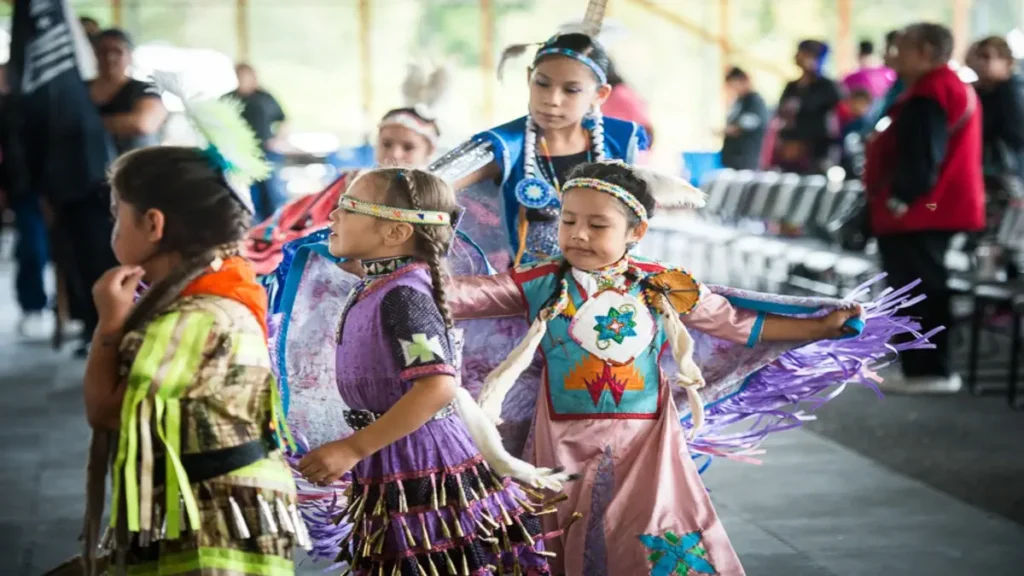
- Fancy Dance: Fast and energetic! Men perform acrobatic spins with colorful bustles, while women’s shawl dances involve twirls that make their fringed shawls look like butterflies.
- Jingle Dress Dance: A healing dance for women, where dresses adorned with metal cones (jingles) create a tinkling sound. It began as a dream vision for healing during the 1918 flu pandemic.
Dancers compete in categories by age and style, judged on footwork, regalia, and synchronization with the drum.
Regalia: More Than Clothing
What dancers wear isn’t a “costume”—it’s regalia, handmade with personal and cultural significance. Feathers represent achievements, beads symbolize family histories, and colors might denote clans or spirits. Each piece is sacred, often passed down through generations, and crafted over months or years.
The Grand Entry kicks off the powwow: Veterans, elders, and dancers enter the arena in a procession, honoring those who came before. Intertribal dances invite everyone to join, fostering unity.
Powwow Etiquette: Do’s and Don’ts for Respectful Participation
Attending a powwow is about respect—treat it like a cultural ceremony, not a festival. Here’s a straightforward guide to help you navigate:
Do’s:
- Listen to the Master of Ceremonies (MC): The MC announces everything, from dance categories to protocols. Pay attention to stay in sync.
- Stand for Honor Songs: When a special song plays (like for veterans or eagles), stand quietly as a sign of respect.
- Ask Before Photographing: Always get permission from dancers before taking photos, especially of regalia or during ceremonies. Some powwows ban photography altogether.
- Bring Your Own Chair: Seating might be limited, so pack a folding chair or blanket. Arrive early for a good spot.
- Participate When Invited: Join intertribal dances if announced—it’s fun and inclusive!
- Support Vendors: Buy crafts, food (like fry bread or bannock), and support Indigenous artisans.
Don’ts:
- No Alcohol, Drugs, or Firearms: Powwows are substance-free zones to honor the sacred nature.
- Don’t Touch Regalia: It’s personal and sacred—admire from afar unless invited.
- Avoid the Dance Arena Unless Dancing: The circle is holy; don’t cut across it.
- No Pointing with Fingers: Use your chin or a nod instead, as pointing can be rude in some cultures.
- Dress Modestly: Cover shoulders and knees out of respect.
Approach with an open heart and willingness to learn. If unsure, ask an elder or organizer—they’re usually happy to explain.
Major Powwow Events Across Canada
Canada hosts hundreds of powwows each year, from coast to coast. Here are some standout events in 2025, showcasing the country’s diverse Indigenous communities. Check official sites for updates, as dates can shift.
- Kamloopa Powwow (Tk’emlúps te Secwépemc, British Columbia): June 27-29, 2025. One of Canada’s largest, with over 1,000 dancers, competitive categories, and cultural workshops in a stunning valley setting.
- Calgary Stampede Powwow (Alberta): July 12-13, 2025. Held at the Saddledome, it features top competitors, grand entries, and ties into the famous Stampede for a massive celebration.
- Siksika Nation Fair Powwow (Alberta): Dates TBA (typically summer). A family-friendly event with dances, rodeo, and fair activities on Blackfoot territory.
- First Nations University Spring Celebration Powwow (Saskatchewan): April 19-20, 2025. In Regina, this competitive powwow draws international participants and honors youth and elders.
- Kitigan Zibi Traditional Powwow (Quebec): May 31-June 1, 2025. A community-focused gathering with traditional dances, artisan markets, and Algonquin storytelling.
- Elsipogtog Powwow (New Brunswick): August 30-31, 2025. On Mi’kmaq land, it emphasizes healing and unity with intertribal dances and feasts.
These are just a few—explore powwow calendars for more in your region. Many align with National Indigenous Peoples Day on June 21.
Wrapping Up: Why Powwows Matter
Powwows are more than events; they’re lifelines to Indigenous resilience and joy. By attending, you support cultural preservation and reconciliation in Canada. Remember, every powwow is unique, shaped by the hosting nation’s traditions. Go with respect, leave with inspiration—and maybe even a new dance move!