
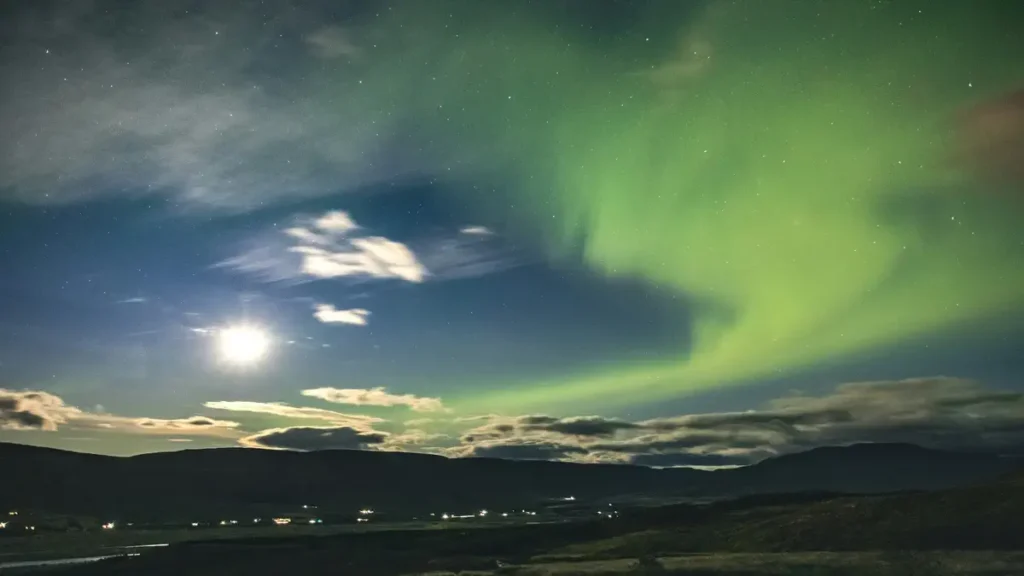
The aurora borealis, nature’s most mesmerizing light show, paints the Yukon’s skies with vibrant greens, pinks, and purples, drawing travelers from around the globe. With its vast wilderness, minimal light pollution, and prime position under the auroral oval, Yukon is one of the world’s best destinations to witness this celestial spectacle. If you’re planning to chase the Northern Lights in 2025, this guide covers the best spots, optimal times, and expert photography tips to make your experience unforgettable.
Why Yukon for the Northern Lights?
Yukon’s remote landscapes, framed by rugged mountains and frozen lakes, offer a pristine backdrop for aurora viewing. Its high northern latitude (around 60–64°N) places it directly beneath the auroral oval, a ring-shaped region where auroral activity is most intense. Unlike more urbanized destinations, Yukon’s low population density means darker skies, perfect for seeing the aurora’s full brilliance. Plus, with the current Solar Cycle 25 peaking between 2023 and 2026, 2025 promises heightened solar activity, resulting in brighter and more frequent auroral displays.
When to See the Northern Lights in Yukon
The aurora borealis is visible in Yukon from mid-August to mid-April, when nights are dark enough to reveal the lights. The best viewing periods are:
- Fall (Mid-August to Mid-October): Crisp, clear nights and vibrant autumn landscapes make this a great time for aurora chasing. The skies darken earlier, with prime viewing hours between 10 p.m. and 3 a.m.
- Winter (Mid-October to Early April): Longer, colder nights offer extended viewing windows, often starting as early as 9 p.m. Winter’s clear skies and snow-covered landscapes amplify the aurora’s glow, especially around the new moon when skies are darkest.
For the best chance, check aurora forecasts from sites like auroraforecast.com or the Geophysical Institute’s Aurora Forecast (gi.alaska.edu). These provide daily updates on the Kp index, a measure of auroral activity (Kp 3–5 is ideal for Yukon). Aim for clear, cloudless nights, and consider the moon phase—new moon nights enhance visibility by reducing natural light pollution.
Top Spots for Aurora Viewing in Yukon
Yukon’s vast terrain offers countless vantage points, but these locations stand out for their accessibility, minimal light pollution, and stunning surroundings:
1. Midnight Dome, Dawson City
Perched above Dawson City, the Midnight Dome offers panoramic views of the Klondike Valley and the aurora dancing overhead. Located within the auroral oval, Dawson City is a prime spot where lights are often visible right in town. For an elevated experience, drive or hike to the Dome, bring a thermos of hot cocoa, and settle in for a dazzling show. Local tip: If you hear someone shout “the lights are out!” in a Dawson bar, join the crowd rushing outside—it’s a Yukon tradition
2. Fish Lake, Whitehorse
Just outside Whitehorse, Fish Lake is a favorite for its easy access and dark skies. A short drive from the city, this spot offers open views of the northern horizon, ideal for aurora spotting. The surrounding hills and frozen lake create a dramatic setting for photography. Stay on the main road to avoid light pollution from Whitehorse’s city glow.
3. Eclipse Nordic Hot Springs, Whitehorse
For a cozy aurora experience, head to Eclipse Nordic Hot Springs. Soak in 47°C mineral-rich waters while the aurora swirls above. The springs are far enough from city lights to offer clear views, and the warm pools make chilly winter nights (down to -40°C) bearable. Book ahead for this unique blend of relaxation and stargazing.
4. Dempster Highway
For adventurers, the Dempster Highway offers a rugged, remote aurora-hunting experience. Stretching from Dawson City toward the Arctic Circle, this highway cuts through untouched wilderness, providing unobstructed sky views. Join a guided tour with operators like Terre Boréale for expert navigation and photography tips. The highway’s isolation ensures minimal light pollution, perfect for capturing the aurora’s full spectrum.
5. Lake Laberge
Experience the aurora from the water’s edge at Lake Laberge, a serene spot 40 minutes from Whitehorse. In fall, guided canoe tours take you to a prepped viewing area with a fire pit, hot drinks, and marshmallows. The lake’s reflective surface amplifies the aurora’s beauty, making it a photographer’s dream.
Photography Tips for Capturing the Aurora
Photographing the aurora borealis requires preparation, but with the right gear and settings, you can capture stunning images, even as a beginner. Here’s how to get those Instagram-worthy shots:
Gear Essentials
- Camera: A DSLR or mirrorless camera with manual settings is ideal. Entry-level models like the Canon EOS Rebel or Nikon D3500 work well.
- Lens: Use a wide-angle lens (14–24mm) with a fast aperture (f/2.8 or lower) to capture more sky and light.
- Tripod: A sturdy tripod is non-negotiable for long exposures.
- Extras: Bring spare batteries (cold drains them fast), a remote shutter release, and a headlamp for hands-free setup.
Camera Settings
- Mode: Set your camera to manual (M) mode.
- ISO: Start with ISO 800–3200, adjusting based on aurora brightness and sky conditions.
- Aperture: Use the widest aperture possible (e.g., f/2.8) to let in maximum light.
- Shutter Speed: Try 5–20 seconds for long exposures, depending on aurora movement. Faster-moving auroras need shorter exposures (5–10 seconds) to avoid blur.
- Focus: Set focus to infinity (∞) or manually focus on a distant star. Turn off autofocus to prevent hunting in the dark.
- White Balance: Use 3200–4800K for natural colors, or experiment for creative effects.
Pro Tips
- Scout Your Spot: Arrive before dark to frame your shot with foreground elements like trees, lakes, or mountains for added depth.
- Test Shots: Take test exposures and check your histogram to avoid over- or underexposure.
- Stay Warm: Yukon winters are brutal. Layer up with thermal clothing, hand warmers, and insulated boots to stay comfortable during long shoots.
- Practice Patience: The aurora can be unpredictable. Monitor forecasts and be ready to wait for the lights to appear, often around midnight.
Also check:
Guided Tours for a Hassle-Free Experience
If you prefer expert guidance, Yukon’s tour operators offer tailored aurora experiences:
- Arctic Range Adventure: Known for excellent guides and photography workshops, they provide cozy viewing cabins and professional tips for capturing the aurora.
- Northern Tales Travel Services: Offers multi-day packages with aurora viewing and daytime activities like dog sledding or snowshoeing. Their guides help beginners adjust camera settings for stunning shots.
- Terre Boréale: Specializes in small-group wilderness trips along the Dempster Highway, combining aurora viewing with Yukon’s raw beauty.
- The Klondike Experience: Ideal for Dawson City visitors, their tours include Midnight Dome visits and local insights.
Book tours early, especially for peak season (December–March), and opt for the first night of your trip to allow rescheduling if clouds interfere.
Planning Your 2025 Aurora Adventure
- Getting There: Fly into Whitehorse International Airport from Vancouver or Calgary. From there, rent a car or join a guided tour for remote spots.
- Where to Stay: Whitehorse offers hotels, cozy cabins, and lodges like the Northern Lights Resort & Spa, with northern-facing cabins for prime viewing. In Dawson City, try the Downtown Hotel for easy access to the Midnight Dome.
- What to Pack: Winter temperatures can plummet to -40°C. Bring insulated clothing, waterproof boots, and a winter clothing package if joining a tour.
- Daytime Activities: Fill your days with Yukon adventures like dog sledding, snowmobiling, or visiting the Yukon Wildlife Preserve. Fall visitors can enjoy vibrant autumn hikes.
A Magical Yukon Experience Awaits
Chasing the Northern Lights in Yukon is more than a bucket-list checkmark—it’s a journey into nature’s grandeur. Whether you’re soaking in hot springs, paddling across Lake Laberge, or standing atop the Midnight Dome, the aurora’s dance will leave you in awe. With 2025’s solar maximum boosting auroral activity, there’s no better time to plan your trip. Use these tips, pack your camera, and get ready for an unforgettable adventure under Yukon’s endless skies.