

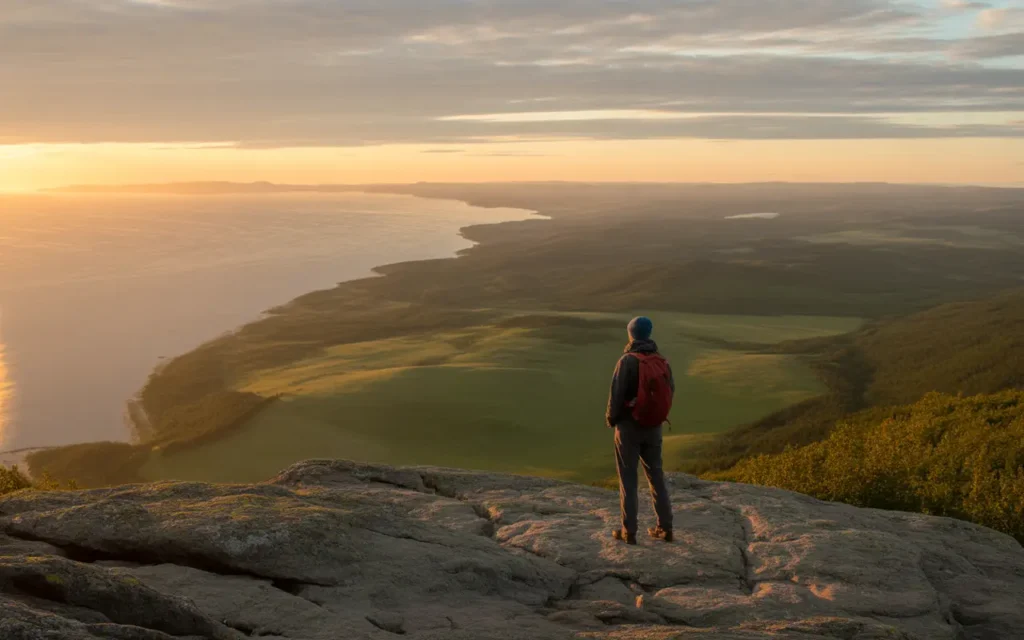
Nestled on the northern tip of Nova Scotia’s Cape Breton Island, Cape Breton Highlands National Park is a treasure trove of rugged cliffs, sweeping ocean vistas, and lush forests. While the iconic Skyline Trail often steals the spotlight, the park’s lesser-known trails offer equally stunning views and a chance to escape the crowds.
Hiking the Hidden Trails of Cape Breton Highlands National Park
This guide dives into the hidden gems of the park’s 26 hiking trails, perfect for adventurers seeking solitude, wildlife encounters, and breathtaking scenery. From serene coastal paths to challenging mountain ascents, here’s everything you need to know to explore the park’s hidden trails.
Why Choose the Hidden Trails?
The Cape Breton Highlands National Park spans over 950 square kilometers, weaving through dramatic landscapes where mountains meet the sea. While popular trails like Skyline and Franey draw crowds for their postcard-worthy views, the park’s quieter trails provide an intimate connection with nature. These paths wind through old-growth forests, past cascading streams, and along rugged coastlines, offering a chance to spot moose, bald eagles, or even whales. With trails ranging from easy strolls to strenuous climbs, there’s something for every hiker. Plus, venturing off the beaten path means fewer people and a deeper appreciation for the park’s untouched beauty.
Note: As of August 6, 2025, a fire ban and temporary trail closures are in effect due to wildfire risks. Always check the Parks Canada website for updates before hiking.
Top Hidden Trails to Explore
1. Blueberry Mountain Trail
- Distance: 6.8 km (out and back)
- Time: 3 hours
- Elevation Gain: 446 m
- Difficulty: Hard
- Trailhead: Across from Cape Rouge look-off, near Corney Brook Campground
Tucked away off the Cabot Trail, the Blueberry Mountain Trail is an unmarked gem that rivals the Skyline Trail for views but with far fewer hikers. The trail begins with a gentle streamside path before climbing steadily along the Old Cabot Trail Road. As you ascend, the forest opens to reveal a 360-degree panorama of rolling highlands and the Gulf of St. Lawrence. In late summer, wild blueberries dot the trail, perfect for a quick snack (but watch for bears!). The rocky terrain and stream crossings add a rugged charm, making this a must for adventurous hikers seeking solitude.
Tip: Wear sturdy boots for the uneven terrain, and bring bear spray, as wildlife is abundant.
2. Corney Brook Trail
- Distance: 6.5 km (out and back)
- Time: 2 hours
- Elevation Gain: 170 m
- Difficulty: Easy
- Trailhead: Off the Cabot Trail, near Corney Brook Campground
For a relaxing hike with stunning scenery, the Corney Brook Trail is a hidden treasure. This gentle path follows a babbling brook through a lush valley, ending at a small waterfall framed by granite cliffs. The trail is wide enough for two, making it ideal for families or couples. Along the way, keep an eye out for snowshoe hares or moose grazing in the meadows. The trail’s proximity to the ocean also offers glimpses of the coastline, especially near the end where you can dip your toes in the chilly Atlantic.
Tip: Combine this hike with a visit to the nearby Corney Brook Campground for a picnic or a refreshing swim.
3. Le Chemin du Buttereau Trail
- Distance: 6.2 km (out and back)
- Time: 2.5–3 hours
- Elevation Gain: 120 m
- Difficulty: Moderate
- Trailhead: Near Chéticamp, off the Cabot Trail
Step back in time on Le Chemin du Buttereau, a trail that traces the footsteps of Acadian pioneers. This path winds through open fields and remnants of old settlements, offering glimpses of the Chéticamp River and distant highlands. The trail is alive with birdsong, and you might spot small mammals like red squirrels darting through the grass. The gradual incline makes it accessible, while the cultural history adds a unique layer to the experience. At the end, you’re rewarded with sweeping views of the Acadian coastline.
Tip: Visit the Chéticamp Visitor Centre before hiking for exhibits on Acadian history to enrich your journey.
4. MacIntosh Brook Trail
- Distance: 1.7 km (out and back)
- Time: 30–45 minutes
- Elevation Gain: 65 m
- Difficulty: Easy
- Trailhead: Off the Cabot Trail, near Pleasant Bay
Perfect for a quick escape into nature, the MacIntosh Brook Trail is a short, family-friendly hike to a charming waterfall. The path meanders through a hardwood forest, with interpretive signs explaining the area’s ecology. The trail’s gentle incline and well-maintained path make it ideal for kids or beginners. At the waterfall, a covered picnic area invites you to linger and enjoy the serene surroundings. In spring, the brook swells, making the falls even more spectacular.
Tip: Bring a picnic to enjoy at the trail’s end, and watch for wildflowers blooming in late spring.
5. Lone Shieling Loop
- Distance: 0.6 km (loop)
- Time: 15 minutes
- Elevation Gain: Minimal
- Trailhead: Off the Cabot Trail, near Pleasant Bay
Don’t let its brevity fool you—the Lone Shieling Loop is a magical stroll through a 350-year-old sugar maple forest. This easy trail feels like stepping into a fairy tale, with moss-covered rocks and towering trees creating a cathedral-like canopy. A replica of a Scottish crofter’s hut adds a touch of history, reflecting the area’s Celtic heritage. It’s a perfect stop for those short on time or looking for an accessible hike with big impact.
Tip: Visit in autumn for vibrant foliage, and pair this hike with the nearby MacIntosh Brook Trail for a longer adventure.
Planning Your Hike
Before you hit the trails, here are some essential tips to ensure a safe and enjoyable experience:
- Check Trail Status: Due to the ongoing fire ban and closures (as of August 2025), confirm trail availability on the Parks Canada website.
- Get a Park Pass: A daily or seasonal Parks Canada Discovery Pass is required for entry. Consider the annual pass if you plan to visit other national parks like the Fortress of Louisbourg.
- Pack Smart: Bring layered clothing, as coastal weather can shift quickly. Pack water, snacks, bug spray, and sunscreen. A camera or binoculars are great for capturing wildlife or distant whales.
- Wildlife Safety: Moose and black bears are common. Keep a safe distance, carry bear spray, and make noise to avoid surprising animals.
- Stay on Trails: Protect fragile vegetation by sticking to boardwalks and marked paths. Pack out all litter to keep the park pristine.
- Best Time to Visit: Late June to early October offers the best weather and trail access. September is ideal for fall colors and fewer crowds.
Also check:
- Northern Lights in Yukon, When and Where to Watch
- How to Survive and Thrive During a Canadian Winter
Where to Stay
- Camping: Chéticamp and Broad Cove Campgrounds offer accessible tent and RV sites, plus oTENTiks (a tent-cabin hybrid). Reserve in advance via the Parks Canada website.
- Nearby Towns: Chéticamp offers cozy inns and B&Bs with Acadian charm, while Ingonish has resorts and cottages near the park’s east entrance. Pleasant Bay and Cape North provide rustic options for a remote feel.
- Backcountry Camping: Fishing Cove is the park’s only designated backcountry site, accessible via a steep 12 km trail. Register at a visitor center first.
Beyond the Trails
The Cape Breton Highlands experience extends beyond hiking. Drive the Cabot Trail for jaw-dropping lookouts, visit Ingonish Beach for a swim, or join a ranger-led interpretive program to learn about Mi’kmaq culture. In the evening, stargaze in the park’s Dark Sky Preserve or catch live Celtic music in Chéticamp. For a cultural deep dive, explore the Hooked Rug Museum or the Celtic Music Interpretive Centre.
Why These Trails Matter
Hiking the hidden trails of Cape Breton Highlands National Park isn’t just about the views—it’s about connecting with a landscape shaped by Acadian, Celtic, and Mi’kmaq histories. These paths offer a chance to slow down, breathe in the salty air, and discover the park’s quieter corners. Whether you’re chasing waterfalls, wildlife, or solitude, these trails deliver an adventure that’s as rewarding as it is unforgettable.